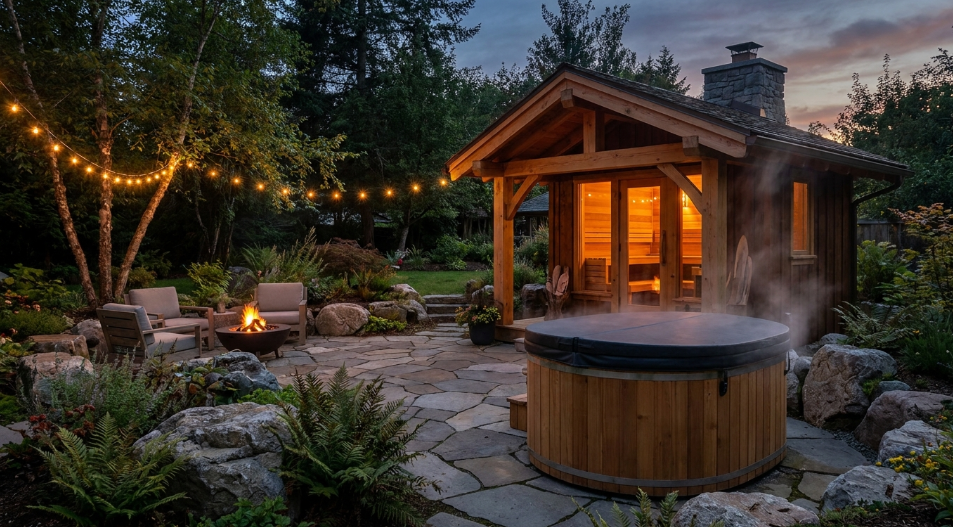
A barrel sauna needs a stable, level, well-drained base, and the three most common options are a compacted gravel pad, a concrete slab, and an existing wood deck rated for the load. Gravel is the cheapest and fastest to install, concrete is the most permanent, and a deck works if the framing underneath can handle roughly 800 to 1,500 pounds concentrated in a small footprint. Bare dirt or grass is the one option to avoid, since ground movement and trapped moisture will eventually shift the barrel and stress the joints between staves.
Why the Base Matters More Than It Looks Like It Should
A barrel sauna is built from curved wood staves held together under tension, similar in principle to a wine barrel, and that construction depends on even support underneath to keep the staves seated correctly. If the ground shifts unevenly, even slightly, the barrel can twist just enough to open small gaps between staves, which lets heat escape and moisture into the wood. Unlike a square cabin sauna, which tolerates minor unevenness with shims, a barrel’s round geometry is less forgiving, so getting the base right at the start saves problems years down the line.
Option One: A Gravel Base
A compacted gravel pad is the most common choice for outdoor barrel saunas, and for good reason: it drains well, costs far less than concrete, and can be built in a weekend. The typical approach is excavating four to six inches, laying landscape fabric to stop weed growth, then filling with compacted crushed gravel, checked with a level as you go. Pressure-treated skids or runners often sit on top of the gravel to spread the barrel’s weight and keep the wood off direct ground contact. Done properly, a gravel base holds up for decades and handles drainage better than concrete in areas with heavy rain or snowmelt.
Option Two: A Concrete Pad
A poured concrete slab is the most permanent option and the standard choice when a sauna is meant to stay in one place indefinitely. It provides the flattest, most stable surface of the three options and is the easiest to keep perfectly level over time, since it will not settle or shift the way gravel occasionally can. The tradeoff is cost and lead time: a proper slab needs excavation, forming, and cure time before the sauna can go on it, and it is essentially permanent once poured, which matters if there is any chance the sauna might move to a different spot on the property later.
Option Three: An Existing Wood Deck
Placing a barrel sauna on an existing deck is possible, but only after confirming the deck’s framing can support the load. A mid-size barrel sauna with people inside can concentrate 800 to 1,500 pounds or more over a relatively small footprint, and older decks were not always built with that kind of point load in mind. A contractor can check joist spacing, span, and the condition of the ledger board before signing off. Decks also need clearance underneath for airflow and periodic inspection, so a deck buried under other structures or lacking a way to check for rot is a harder case to approve.
Option Four: Composite or Paver Pads
Interlocking pavers or composite deck tiles sit in between gravel and full concrete on both cost and permanence. A paver base spreads weight similarly to gravel but offers a cleaner, more finished look and is easier to keep weeds from creeping through. It still needs a properly compacted base underneath the pavers themselves, since pavers alone do not create stability, they just sit on top of whatever base is prepared for them. This option suits buyers who want something more polished than raw gravel without committing to a poured slab.
Weighing Cost Against Permanence
Gravel bases typically run a few hundred dollars in materials for a DIY install, concrete slabs commonly land in the low thousands once a contractor pours and finishes it, and paver pads sit somewhere in between depending on the material chosen. None of these figures include the sauna itself. Buyers comparing barrel sauna listings from retailers such as Almost Heaven, Redwood Outdoors, and Sweat Decks should check whether the manufacturer specifies a minimum base requirement, since some warranties are conditioned on the unit sitting on an approved surface rather than directly on soil.
Drainage: The Detail That Gets Skipped
Water pooling under or around a barrel sauna is one of the fastest ways to shorten its life, since standing moisture wicks into the wood from below even if the exterior finish is holding up well. Any base option should slope slightly away from the sauna, roughly a quarter inch of fall per foot, so rain and snowmelt run off rather than collecting. Gravel handles this naturally if graded correctly during installation. Concrete needs the slope built into the pour itself, since a flat slab will hold water in low spots that are hard to fix after the fact.
Getting the Level Right Before You Set the Barrel
Aim for the base to be level within about a quarter inch across its full footprint before the barrel goes on. Use a long level or a laser level across multiple points rather than checking just the center, since a base that looks flat in one spot can still slope toward an edge. Skids or runners under the barrel help distribute any minor unevenness that remains, but they are a buffer, not a substitute for a properly leveled base. Rushing this step is the most common reason buyers end up troubleshooting gaps or a door that will not close flush a year or two after installation.
Frequently Asked Questions
Can a barrel sauna sit directly on dirt or grass? Not for long. Untreated ground shifts with moisture and freeze-thaw cycles, and grass traps dampness against the wood. Even simple gravel is a real improvement.
Does a barrel sauna need a full concrete slab? No. A properly built gravel base or paver pad can support it just as effectively, at a fraction of the cost and time.
Can I put a barrel sauna on an existing wood deck? Often yes, if the framing is confirmed to handle the concentrated weight and local code allows it. Check joist spacing and condition first.
How level does the ground need to be under a barrel sauna? Within about a quarter inch across the base. Barrel staves rely on tight, even fit, and an uneven base can stress that over time.
References
- Cardiovascular and Other Health Benefits of Sauna Bathing: A Review of the Evidence, Mayo Clinic Proceedings, 2018
- Clinical Effects of Regular Dry Sauna Bathing: A Systematic Review, Evidence-Based Complementary and Alternative Medicine, 2018
- Does the Combination of Finnish Sauna Bathing and Other Lifestyle Factors Confer Additional Health Benefits? A Review of the Evidence, Mayo Clinic Proceedings, 2023