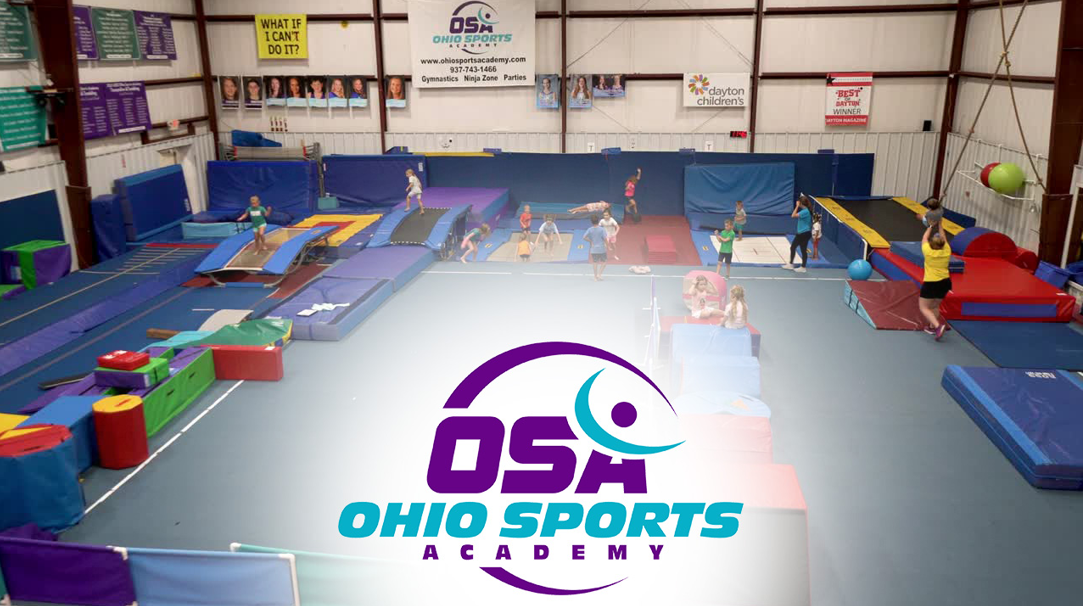
Families looking for gymnastics often want more than a place where children can learn cartwheels, handstands, and tumbling skills. They also want an environment that helps kids gain confidence, follow directions, stay active, and enjoy the process of learning something new. That broader approach is part of what makes gymnastics valuable as both a sport and a structured youth activity.
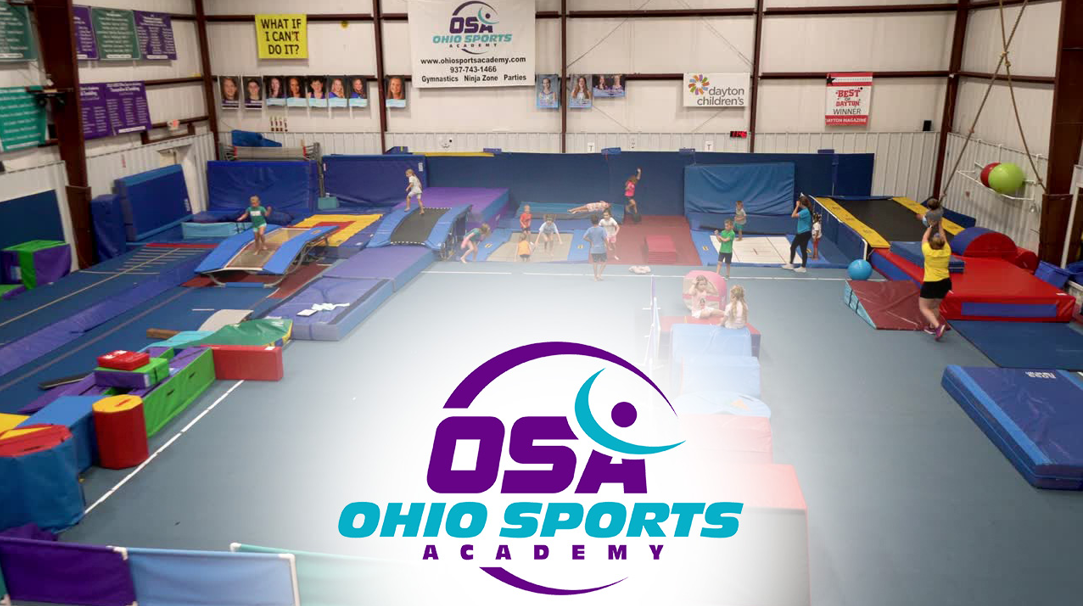
Ohio Sports Academy offers gymnastics and movement-based programs designed for a wide range of ages and interests, including pre-kindergarten gymnastics, tumbling, ninja, aerial arts, adaptive gymnastics, cheer jumps and motions, trampoline classes, private lessons, competitive teams, and additional activities.
For Dayton-area families, the academy’s program structure creates several entry points for children who are brand new to gymnastics as well as students who want to continue building more advanced skills. The emphasis is not only on what a child can do today, but also on creating progressions that make the next skill feel achievable.
Dayton Gymnastics Can Start With Foundational Movement Skills
Gymnastics does not have to begin with advanced flips or competitive routines. For younger children, it often starts with much simpler goals: learning balance, body awareness, coordination, safe landings, listening skills, and how to move through an organized class.
Ohio Sports Academy’s pre-kindergarten program uses age-based groups that gradually increase independence. Cubs, designed for ages two through three and a half, participate with a grown-up while working through gymnastics stations and an obstacle course. Raccoons, for ages three and a half through four and a half, work more independently while practicing basic gymnastics skills and following directions. Birds, for ages four and a half through five and a half, continue building skills that prepare them for the larger gym environment.
The academy also offers an Owls class for kindergarten students. This transitional class is held in the larger gym and uses a smaller class size to provide more individual attention while students work on basic skills, body shapes, stations, and obstacle courses.
That progression matters because children develop physically and socially at different speeds. A well-structured beginner program gives them room to grow without expecting every child to arrive with the same experience.
A Broader Program Mix Gives Families More Ways to Stay Active
Gymnastics may be the starting point, but children do not all stay interested in exactly the same activity. Some enjoy traditional tumbling. Others are drawn to obstacle courses, aerial arts, cheer skills, trampoline work, or the challenge of competitive programs.
Ohio Sports Academy currently lists programs that span those interests, giving families options as a child’s preferences and abilities change. Its tumbling classes are designed for students with different experience levels, while ninja programs focus on movement skills such as rolling, vaulting, jumping, swinging, climbing, and body control.
Aerial arts add another direction for students who enjoy building strength and learning to move on apparatus such as silks, hammock, and trapeze. Cheer-focused training allows athletes to spend time improving jumps, motions, strength, flexibility, and related technique.
The result is a movement-based environment where a child can begin in one program and later discover that another activity is a better fit. That flexibility can be valuable for families who want consistency in the training environment without assuming one pathway is right forever.
That variety can also help siblings with different interests participate in the same broader environment while pursuing classes suited to their age and goals.
Skill Progressions Help Turn Difficult Movements Into Achievable Goals
One of the most useful lessons in gymnastics is that advanced skills are usually built from smaller pieces. A clean cartwheel, handstand, round-off, or tumbling pass is rarely the result of one lucky attempt. Students learn positions, drills, strength, timing, and body control before putting everything together.
Ohio Sports Academy describes its training around progressive skill development rather than simply moving students forward because a certain amount of time has passed. That kind of structure gives students a clearer sense of what they are working toward.
For younger athletes, progress might mean following an obstacle course more independently, holding a stronger body position, or completing a roll with better control. For an older tumbler, it may involve mastering prerequisite skills before advancing to a more difficult pass.
dayton gymnastics programming at Ohio Sports Academy also emphasizes building a strong gymnastics foundation while students have fun, learn, grow, and work through stations and obstacle courses.
Progressions can make training more encouraging because improvement becomes visible. A skill that felt impossible several weeks earlier may gradually become familiar. That experience teaches students that repetition and patience have a purpose, which is useful both inside and outside the gym.
Confidence Is Treated as Part of the Learning Process
Physical skills are easy to see, but confidence is often one of the biggest changes families notice as children continue with a structured activity.
Ohio Sports Academy publicly emphasizes approaching challenges, building confidence, and celebrating success. Its philosophy encourages students to try new skills, stay positive when something is difficult, and understand that mistakes are part of learning.
That message fits naturally with gymnastics. Students fall out of handstands, miss shapes, forget sequences, and need repeated attempts before a movement clicks. A supportive coaching environment can help them interpret those moments as practice rather than failure.
Confidence in this setting does not mean telling every student that every attempt is perfect. It means giving children a safe framework for trying, receiving feedback, making adjustments, and recognizing genuine progress.
That can be especially valuable for younger students who are still learning how to handle frustration. A child who discovers that a difficult skill becomes easier through practice begins to build a more realistic kind of confidence: the belief that improvement is possible when they keep working.
A Safe, Structured Environment Matters for Gymnastics Training
Gymnastics involves movement, speed, height, rotation, and unfamiliar body positions, so the training environment matters. Equipment, class organization, coaching, progressions, and supervision all contribute to how safely students can learn.
Ohio Sports Academy describes its facility as a safe and clean environment with low coach-to-student ratios. Its public materials also emphasize regular equipment cleaning and class structures designed around age and ability.
For families comparing programs, those details are worth considering alongside schedules and class names. A beginner should not be pushed into a skill simply because it looks exciting. Students need appropriate drills, physical preparation, and coaching before moving to more demanding movements.
Class size can also influence the experience. Younger children often benefit from more direct guidance because they are still learning how to move between stations, listen to instructions, and understand gym expectations.
A strong program balances fun with structure. Children should leave class excited to return, but they should also be learning how to move with greater control, follow coaching, and respect the progression required for new skills.
Dayton-Area Families Can Look for Growth Beyond the Next Skill
Gymnastics is easy to measure by visible milestones. A first cartwheel, handstand, round-off, or new tumbling skill can be exciting. But the value of a good program can extend beyond the moment a skill is mastered.
Students are also practicing consistency, listening, coordination, strength, patience, and the ability to work through challenges. Younger children may become more independent in class. Older athletes may learn how to break a difficult goal into smaller steps and stay focused through repetition.
Ohio Sports Academy’s range of programs gives families different ways to pursue those benefits, whether a child is interested in pre-kindergarten gymnastics, tumbling, ninja, aerial arts, adaptive gymnastics, cheer, trampoline, or competitive training.
The right class should fit the student’s age, current ability, interests, and comfort level. It should provide enough challenge to encourage growth without making every session feel overwhelming.
See also: What to Put a Barrel Sauna On: Pads, Decks, and Gravel
Building Stronger Skills and Stronger Confidence Through Gymnastics
For families exploring Dayton gymnastics, the best program is not necessarily the one with the flashiest skills. It is the one that creates a clear path for learning while keeping children engaged, supported, and appropriately challenged.
Ohio Sports Academy’s approach combines age-based instruction, progressive skill development, multiple movement disciplines, and an emphasis on confidence. That gives students opportunities to begin with foundational movement and continue into more specialized interests as they grow.
Parents can look at more than the next skill on a checklist. They can consider whether their child is becoming more coordinated, more willing to try, better at following instruction, and more comfortable working through mistakes.
Those changes may happen gradually, but they are part of what structured gymnastics training can offer. When students learn that progress comes from practice, feedback, and persistence, they gain something useful whether they stay in gymnastics for one season or continue for years.
A strong gymnastics program should help children move better while also giving them reasons to feel proud of how they are learning. For Dayton-area families, that combination of skill development, active fun, and growing confidence can make gymnastics a meaningful part of childhood.